06 · Research Seminar · 2025
Trusting AI with your health?
A 2×2 online experiment testing whether urgency and language style influence trust in fictional AI-generated health advice.
OwnershipSix-person team research project
This page presents the shared study. The supplied project files do not include a task-level contribution log, so no individual role is claimed.
Research question
Do the urgency of a health situation and the use of lay or medical language change how much people trust AI-generated health advice?
Approach
From question to evidence.
- 01
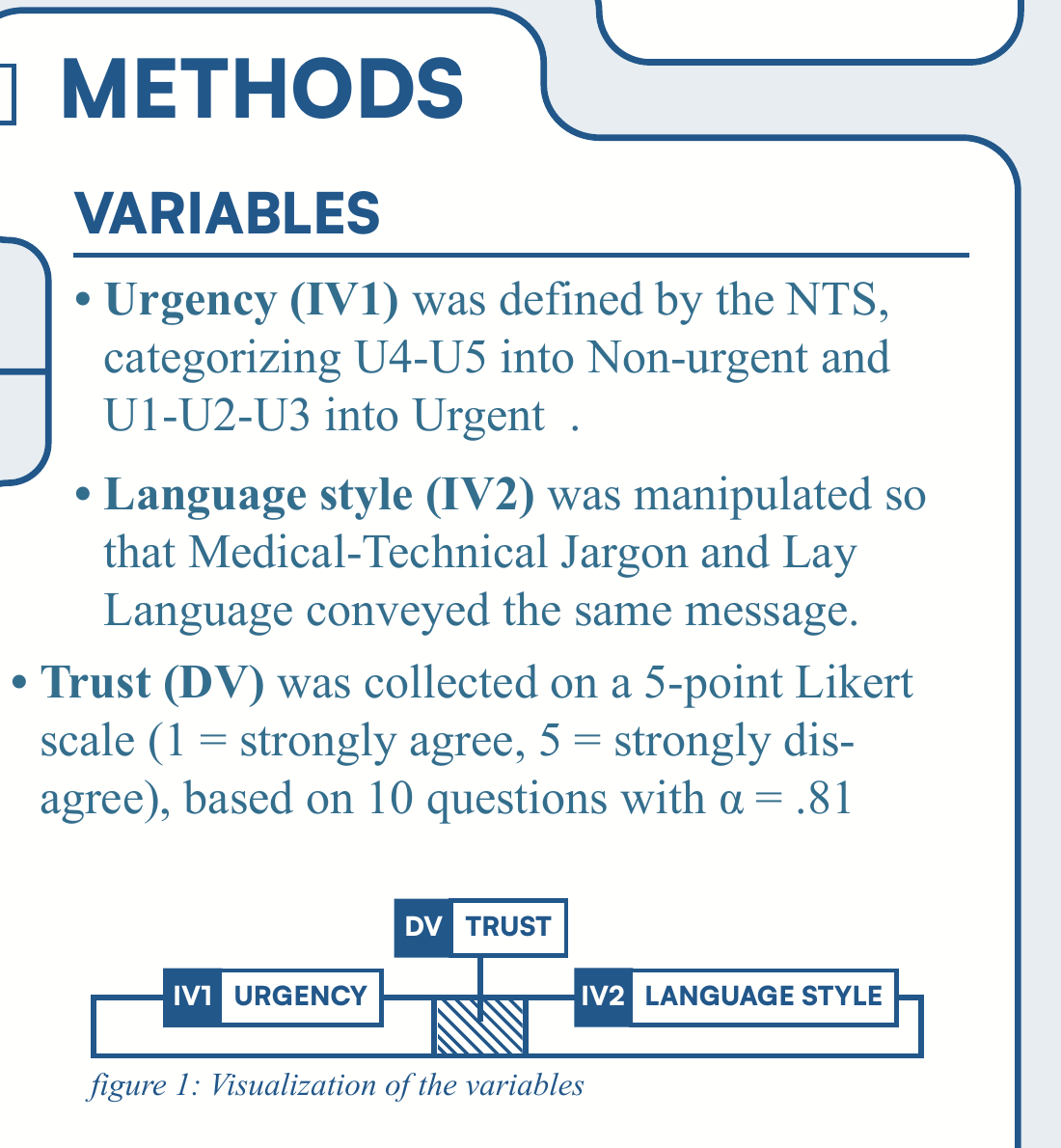
Designed four short fictional AI-health videos crossing urgent versus non-urgent situations with lay versus medical-jargon language.
- 02
Ran a pre-test with 54 people, then collected 121 usable main-study responses through Qualtrics.
- 03
Adapted ten items from the Wake Forest Physician Trust Scale; the reported internal consistency was α = .806. The team analyzed the 2×2 design in Jamovi.
What the work found
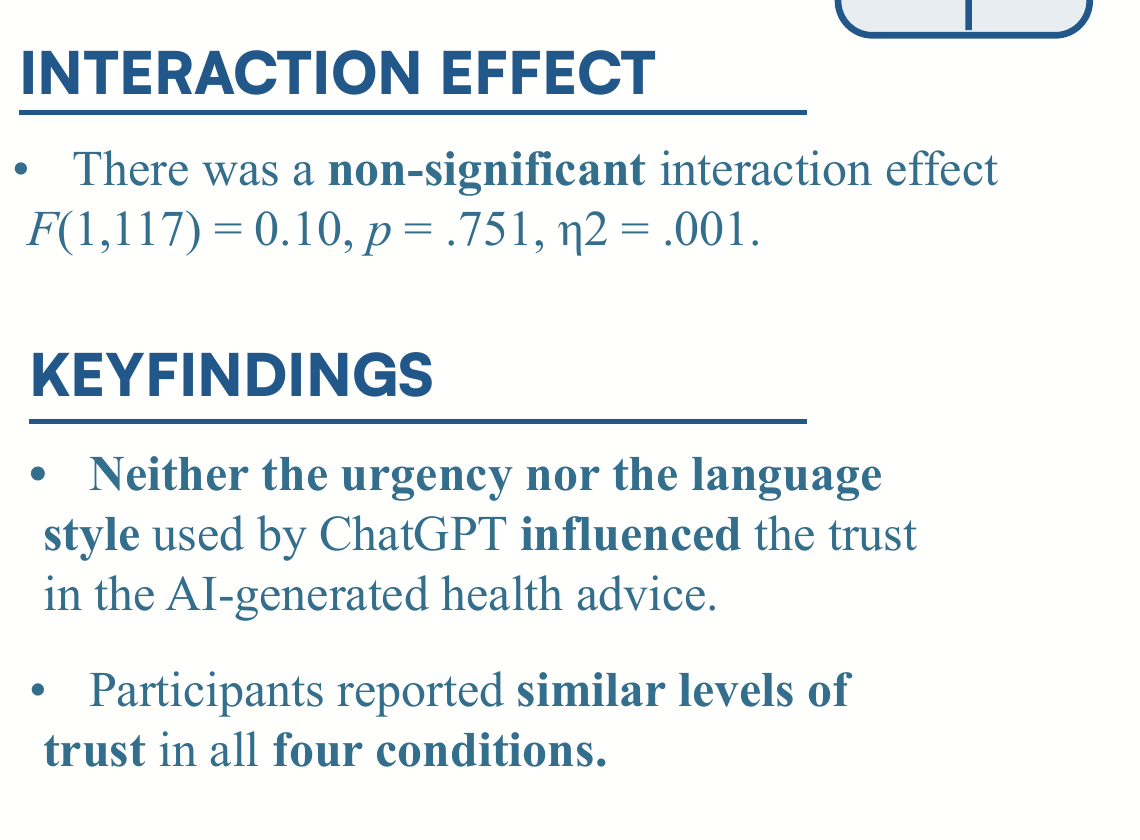
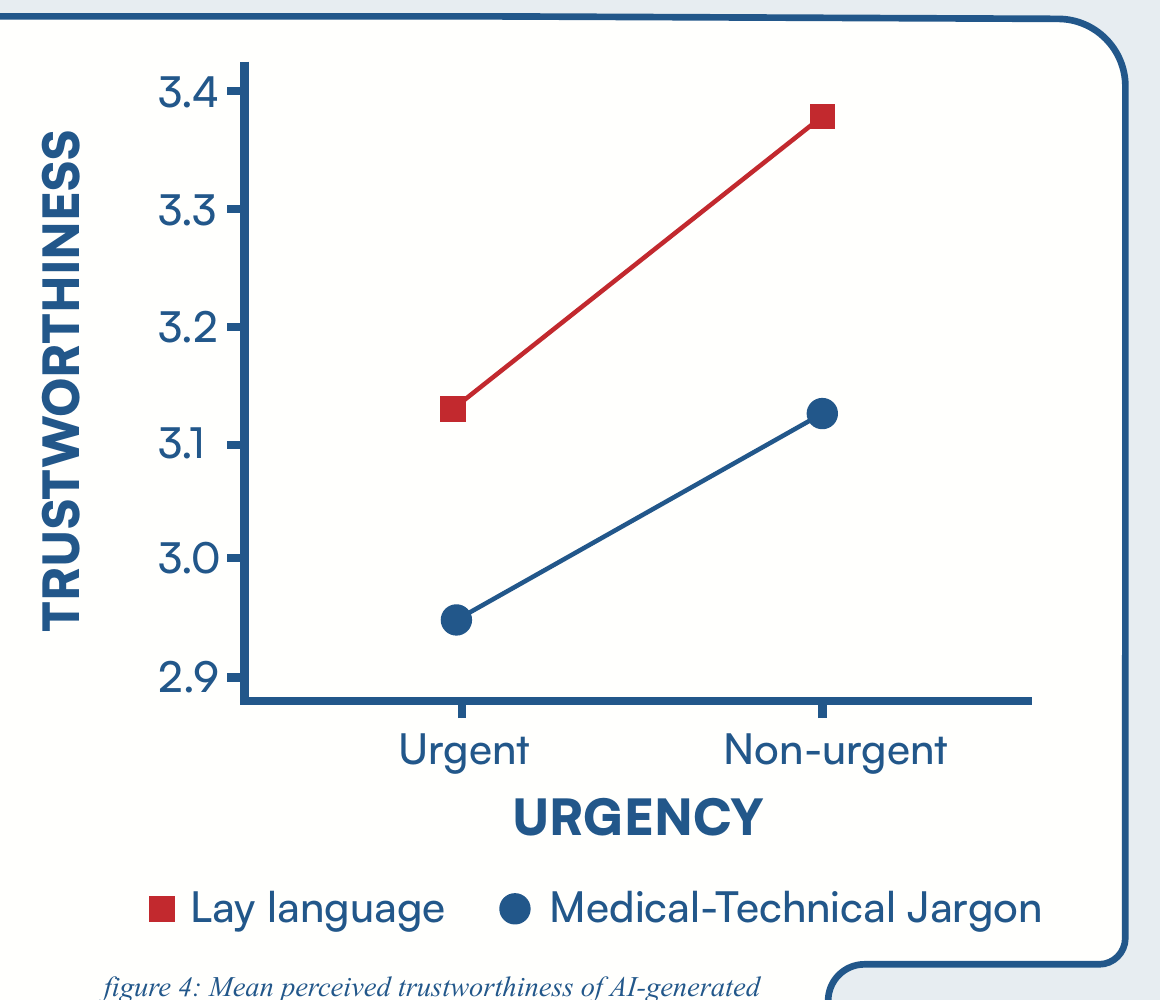
The study found no statistically significant main effect of urgency (p = .069), no main effect of language style (p = .059), and no interaction (p = .751). Trust was highest in the lay/non-urgent condition and lowest in the jargon/urgent condition, but those descriptive differences did not support the hypotheses.
Limitations & next step
The scenarios were hypothetical and online, the sample leaned young and highly educated, and a physician-trust scale had to be adapted for AI. The findings therefore support caution: they are useful for refining future studies, not for claiming that language and urgency never affect trust.
Evidence from the source work
Selected artifacts.
Methods & tools used here